News
The National Treasury held a stakeholders’ consultation workshop on reforming Capital Gains Tax (CGT) in February 2026, as policymakers weigh measures to improve equity, fairness, efficiency and revenue performance. The goal of the workshop was to get views and perspectives from stakeholders about CGT policy reform.
CGT currently contributes modest revenues to the Kenya’s tax collection despite recent reforms, including an increase in the rate of tax from 5 per cent to 15 per cent in 2023 and an expansion of coverage to include indirect offshore transfers deriving value from Kenyan immovable property.
The National Treasury, underscored that CGT is a core element of Kenya’s income tax framework and must reflect constitutional principles of fairness and equity. This call for evidence-based reforms to ensure CGT remains predictable, administratively sound and supportive of investment.
A technical session of the workshop highlighted both improvements and persistent challenges in the administration of CGT. Since reinstatement of CGT in 2015, CGT collections have generally trended upward, though performance remains sensitive to macroeconomic conditions and the frequency of large transactions. Administration has been digitised through the iTax system, integrated with stamp duty and asset registration platforms which has generated some efficiencies in collection. The CGT system in Kenya only taxes nominal gains without inflation adjustment, creating valuation difficulties for inherited or long-held assets. Offshore enforcement also creates a challenge for lack of visibility by the tax administration.
TaxDev presented international evidence that showed that well-designed CGT systems should avoid taxing ‘normal’ returns that merely compensate for inflation. A good CGT system should also minimise distortions across income types and ideally align rates closely with income tax to strengthen fairness, equity and improve revenue mobilisation. Proposals discussed included inflation indexation, allowing loss carry-forwards from one asset to another and rationalising exemptions before considering further rate adjustments.
The workshop participants supported the need for clarity and predictability, emphasising that reforms should tax realised economic gains fairly without discouraging legitimate investment or restricting capital mobility.
The workshop concluded that while CGT is an increasingly important revenue mobilisation instrument, further technical analysis is required, especially on inflation treatment, rate structure and scope, before further reform measures can be put forward. The National Treasury found the engagement incredibly helpful and appreciated the opportunity to have an open discussion on this important tax policy area and committed to pursuing tax system reforms anchored on empirical evidence and international best practice.
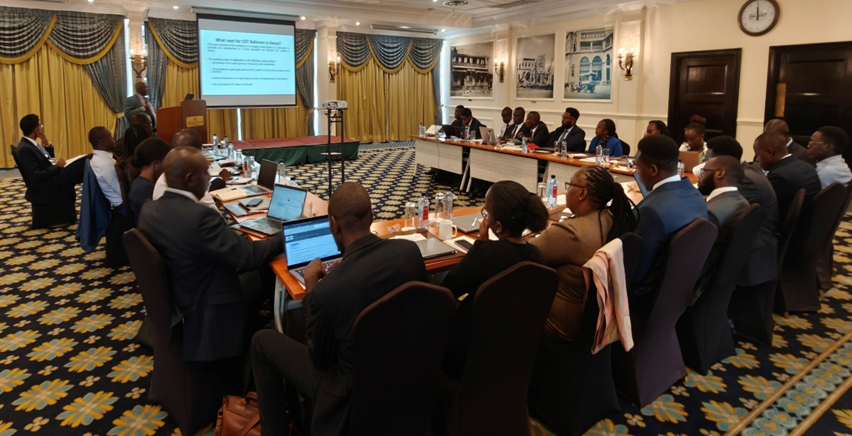

Photos of workshop participants (Photos by Dr. Alex Oguso, TaxDev Country Economist, Kenya):
Published on: 11th February 2026
Print